Pokémon are a global phenomenon, drawing in collectors across different demographics and from all types of backgrounds. It all began in 1996 in Japan with the launch of the Pokémon Trading Card Game (TCG), before the craze spread worldwide.
One of the most common debates amongst collectors is over Japanese vs. English Pokémon cards. Some swear by the former for their crisp details, exclusive artworks and niche appeal, while others stick with the latter for easier access, higher demand and tournament play.
Read on to learn about their main differences and what drives their respective values to decide which ones might be the best fit for your collection.
Apart from a few censorship exceptions and regional exclusives, both Japanese and English Pokémon cards share most of the same artwork. Where they really differ is in how the cards are physically made.
The most obvious tell is the language on the cards. The Japanese ones use kanji, hiragana and katakana. English cards use a straightforward Latin alphabet, which opens them up to a wider number of collectors and players outside Japan.
Then there’s the design on the back of the card. English cards have sported the same recognizable blue Pokémon logo since 1999. By comparison, Japanese cards switched from the old Pocket Monster style to a darker, more matte blue.
Japanese cards adopted silver borders early, and the English TCG caught up with Scarlet & Violet in 2023. Older English sets used yellow borders, which are still a favorite among nostalgic collectors.
Some promos, like Japan's Munch Scream line with Eevee, feature art you won't find in English releases.
Side by side, Japanese cards appear to have better print quality than their English counterparts. The paper is thinner but features glossier finishes and lively colors. English are printed on thicker stock that blocks light more effectively, with vintage Wizards of the Coast sets being the main exception.
The holo finish varies too, with Japanese Pokémon cards often showing more detailed and complex patterns, especially on promos.
Both versions are subject to the same standards used by professional grading companies like PSA, BGS, CGC or Beckett. That said, Japanese cards tend to score higher thanks to more consistent quality, which can lead to higher market prices than their English equivalents.
Though this used to differ between regions, both Japanese and English Pokémon TCG card packs guarantee the pull of one or more rarer cards.
For English cards, this guarantee began with the ninth generation of the Pokémon TCG. Before that, it was only something Japanese sets offered. Special Japanese releases like Vstar Universe, for instance, guarantee at least one hit. English sets now follow this approach too.
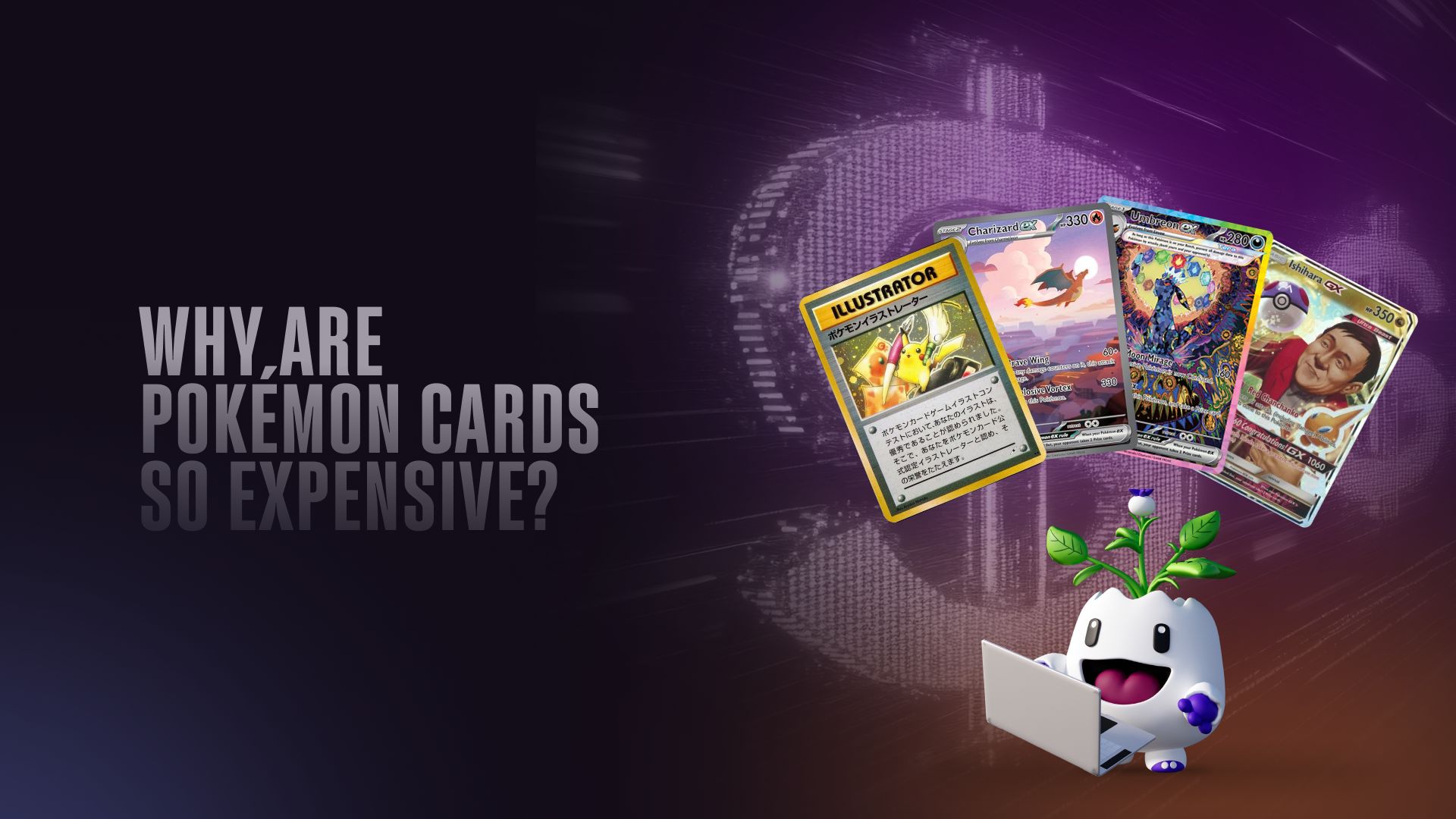
Japan offers far more exclusives tied to special events, store launches and magazine inserts. Examples include Illustrator Pikachu, Pokémon Center opening promos and magazine-only promos from CoroCoro.
Exclusive promo cards are rarely launched in the English version and often become revered collector items.
Differences in market size and import logistics dictate the difference in value between Japanese and English cards.
Value rises with scarcity, so rare Japanese promos or exclusives can bring in high prices, as print runs are limited and releases are region-locked. But even with that said, Japanese cards are often cheaper in Japan, becoming more expensive overseas due to demand, regional rarity and shipping costs.
English cards are easier to find in Western countries, but may soar in price when demand spikes, like during special events such as tournament plays or anniversaries. However, in these cases, value can go down once hype dries up.
Japanese collections have fewer cards in a booster pack (typically five), and each box contains 30 booster packs. In contrast, English booster packs hold 10 cards, and an English box has as many as 36 booster packs inside.
Still, in a Japanese booster box, you’ll find the entire set art on the cover, which may drive up value if the cards are in the box. This isn’t the case with English booster boxes.
English cards are the only version that are legal in official English-speaking contests. Japanese cards are generally not accepted, except if both players agree in a casual format.
If you plan to compete with your Pokémon cards, you should definitely consider this when buying.
The value of Pokémon cards mainly comes down to supply, rarity, condition, graded population numbers and demand.
Japanese Pokémon cards often do better in quality-driven markets because cleaner prints earn higher grades and special editions tend to push prices up.
Sometimes, certain Japanese cards end up cheaper simply because big runs in Japan overflow the local market. But for rarer cards, collector demand can send prices well above that commanded by English versions.
Some single cards inside Japanese boxes can be volatile. Waifu cards, which feature full-art female trainers, tend to fetch significantly higher prices in Japan compared to their English versions.
Japanese versions tend to hold their value better than English cards when sets get reprinted (something that usually drags the price of English cards down). On the flip side, English cards typically do better in the resale market in the West simply because collectors can get their hands on them more easily.
The choice between Japanese and English Pokémon cards depends on your collecting goals.
The benefits of Japanese cards include superior quality, exclusives, unique artwork, guaranteed pulls from early on, a nostalgic feel and the potential for steady price growth.
Cons include a lack of availability outside Japan, the language barrier for tournament play, and lower liquidity in some markets.
As for English Pokémon cards, they’re widely available, can be used in tournaments and tend to have a higher resale value in Western countries. However, their prints can be inconsistent and they’re vulnerable to reprints and oversaturation.
Ultimately, if you want to participate in tournaments, then English cards are the way to go. For pure collecting or investment purposes, the Japanese ones generally score higher. Mix them if you can (as many do).
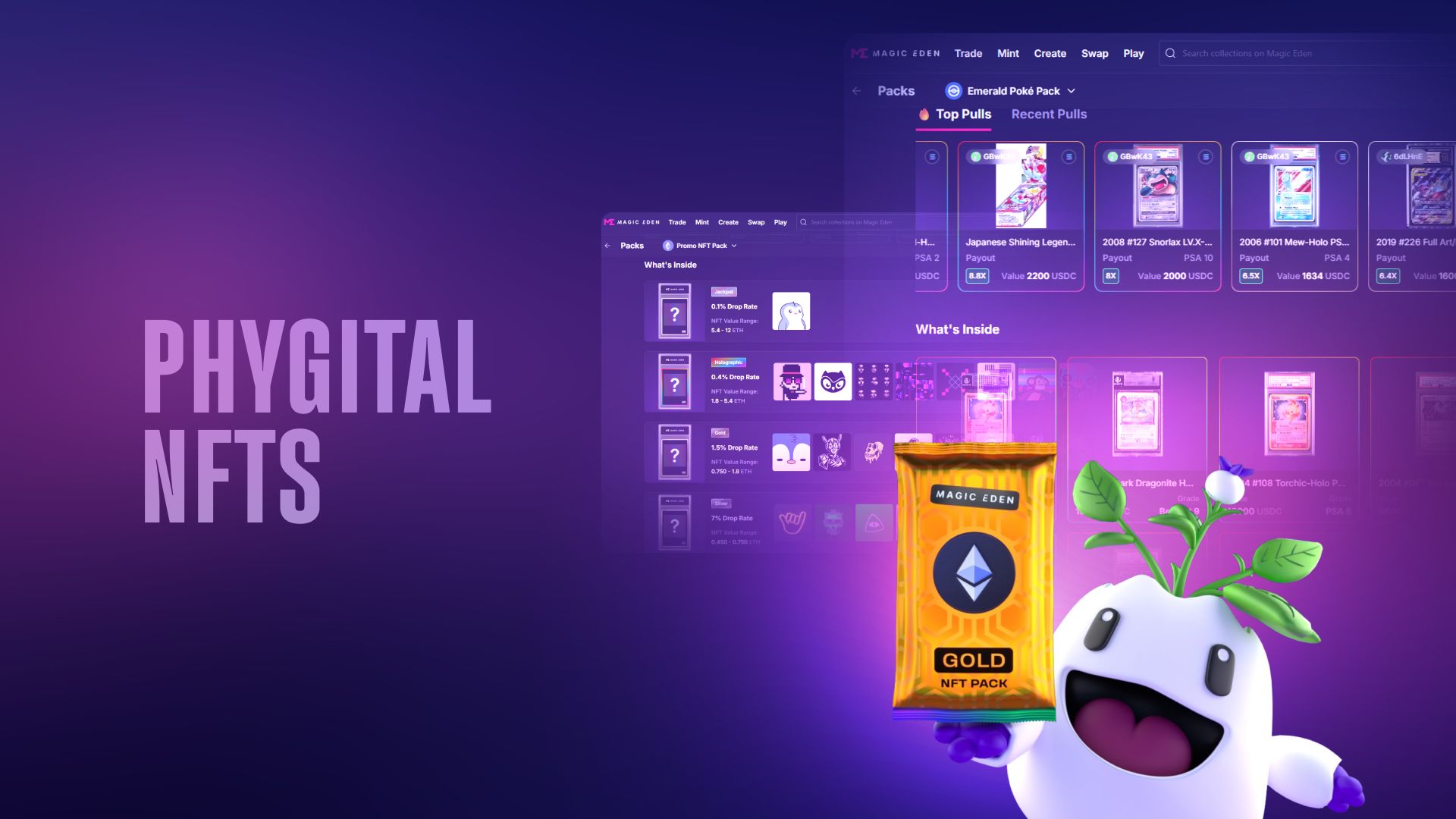
Magic Eden Poké Packs let you rip digital Pokémon card packs tied to real, graded cards through our partnership with Collector Crypt.
Buy a pack, rip it to get that nostalgic hit, and then choose your path. You can cash out immediately at 85-90% fair market value, trade the card you pulled on the Magic Eden marketplace or redeem the actual, physical card and have it sent to your address.
Head over to Magic Eden to explore Pokémon NFT Packs and build your collection.
Oftentimes the answer is yes. Shorter print runs, vintage items and exclusive promos help Japanese cards hold their value better than English reprints. Having said that, condition matters a lot, and cards that score highly according to professional graders like PSA, BGS, CGC or Beckett tend to grow in value the most.
The information provided on this website is provided for general educational purposes only and is in no way financial or investment advice. Certain information may have also been provided to us or prepared by third parties; these materials are provided for convenience and are not an endorsement by Magic Eden. Magic Eden is not liable for any errors, changes or amendments to such information, including any actions taken in reliance on such information.